Your What system is the skin apart of images are ready in this website. What system is the skin apart of are a topic that is being searched for and liked by netizens now. You can Find and Download the What system is the skin apart of files here. Get all royalty-free photos.
If you’re searching for what system is the skin apart of pictures information connected with to the what system is the skin apart of interest, you have come to the right site. Our site frequently gives you suggestions for viewing the highest quality video and picture content, please kindly search and locate more enlightening video content and graphics that fit your interests.
What System Is The Skin Apart Of. This system is responsible for all the sensations we feel cold hot smooth rough pressure. It is part of an essential bodily system. It protects the body from external. The skin is our largest organ.
 Learn About The Skin Science For Kids Human Body Systems Skin Science Integumentary System From gr.pinterest.com
Therefore its role as a part of the excretory system is minimal. These associated organs are responsible for the production of digestive enzymes removal of toxins. One of the main functions of the skin is protection. Sweat glands in the skin secrete a fluid waste called sweat or perspiration. To combat these attacks on the cutaneous microenvironment the skin functions as more than a physical barrier. Our sense of touch is controlled by a huge network of nerve endings and touch receptors in the skin known as the somatosensory system.
They are evaluated when assessing overall nerve health and condition.
Therefore its role as a part of the excretory system is minimal. The skin has an immune system that protects the body from infection cancer toxins and attempts to prevent autoimmunity in addition to being a physical barrier against the external environment. Immune responses originating in the skin are mounted and executed by cells and molecules of the innate or the adaptive immune system. The Ability To Sense Touch. The skin is part of the integumentary system but it also plays a role in excretion through the production of sweat by sweat glands in the dermis. In small-bodied marine invertebrates the skin is the most important excretory organ.
 Source: pinterest.com
The skin and its derivatives hair nails sweat and oil glands make up the integumentary system. The epidermis the dermis and subcutaneous fat tissue. Here we explain what its made of what it does and how it does it. Therefore its role as a part of the excretory system is minimal. The somatic nervous system works with the central nervous system to protect the skin.
 Source: pinterest.com
To combat these attacks on the cutaneous microenvironment the skin functions as more than a physical barrier. Your skin along with your hair nails oil glands and sweat glands is part of the integumentary in-TEG-you-ME I NT-a-ree system. They are evaluated when assessing overall nerve health and condition. The skin contains many specialized cells and structures. The skin is actually the bodys largest organ.
 Source: pinterest.com
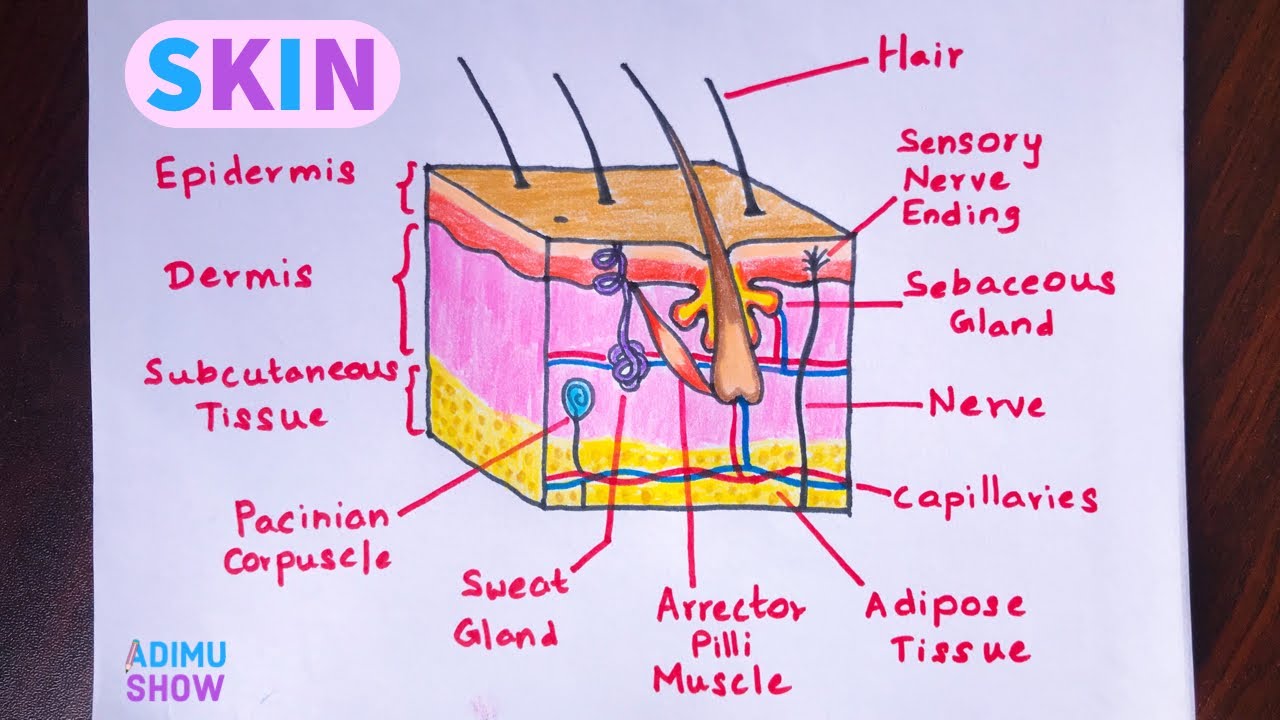
The skin is structured into three layers. As a protective interface between internal organs and the environment the skin encounters a host of toxins pathogenic organisms and physical stresses. The stratum corneum contains corneocytes which are terminally differentiated keratinocytes. They are evaluated when assessing overall nerve health and condition. This article will discuss all of these components in detail together with some clinical notes about them and the integumentary system as a whole.
 Source: pinterest.com
In small-bodied marine invertebrates the skin is the most important excretory organ. The stratum corneum contains corneocytes which are terminally differentiated keratinocytes. The skin is the bodys largest organ made of water protein fats and minerals. The skin protects us from microbes and the elements helps regulate body temperature and permits the. The epidermis the dermis and subcutaneous fat tissue.
 Source: pinterest.com
The skin is structured into three layers. The stratum corneum contains corneocytes which are terminally differentiated keratinocytes. Immune responses originating in the skin are mounted and executed by cells and molecules of the innate or the adaptive immune system. The skin is the bodys largest organ made of water protein fats and minerals. Its our first line of protection against the outside environment it houses one of our five senses it absorbs sunlight for vitamin D and.
Source: gr.pinterest.com
The digestive system includes the stomach small intestine and large intestine. Basket Cells Basket cells surround the base of hair follicles and can sense pressure. The somatic nervous system works with the central nervous system to protect the skin. It does this by telling us to lift our hand off a hot surface to avoid burning ourselves. However its primary functions are temperature control and pheromone release.
 Source: pinterest.com
It is part of an essential bodily system. Create your account View this. Adaptive responses in contrast show a high degree of specificity as well as memory but need a protracted time for their development. The skin is part of the Integumentary System and is the largest organ in the body. In small-bodied marine invertebrates the skin is the most important excretory organ.
 Source: pinterest.com
To combat these attacks on the cutaneous microenvironment the skin functions as more than a physical barrier. Broadly speaking the integumentary system is composed of skin and its appendages subcutaneous tissue deep fascia mucocutaneous junctions and breasts. It is part of an essential bodily system. The skin immune system is sometimes called skin-associated lymphoid tissue SALT which includes peripheral lymphoid organs like the spleen and the lymph nodes. The epidermis the dermis and subcutaneous fat tissue.
 Source: pinterest.com
The integumentary system consists of the skin hair nails and exocrine glands. The skin is structured into three layers. The liver belongs to the digestive or the gastrointestinal system. Overview The skin is the largest organ of the body. Broadly speaking the integumentary system is composed of skin and its appendages subcutaneous tissue deep fascia mucocutaneous junctions and breasts.
 Source: pinterest.com
The primary function of this system is to protect the body from external elements such as bacteria or pollution. To combat these attacks on the cutaneous microenvironment the skin functions as more than a physical barrier. Immune responses in the skin involve an armamentarium of immune. The digestive system includes the stomach small intestine and large intestine. How do the integumentary and excretory system work together.
 Source: pinterest.com
The skin and its derivatives hair nails sweat and oil glands make up the integumentary system. Your skin protects your body from germs and regulates body temperature. To combat these attacks on the cutaneous microenvironment the skin functions as more than a physical barrier. Immune responses in the skin involve an armamentarium of immune. The skin protects us from microbes and the elements helps regulate body temperature and permits the.
 Source: pinterest.com
The skin contains many specialized cells and structures. The epidermis the outermost layer of the skin is subdivided into the stratum corneum stratum lucidum stratum granulosum and stratum basale. The skin has an immune system that protects the body from infection cancer toxins and attempts to prevent autoimmunity in addition to being a physical barrier against the external environment. One of the main functions of the skin is protection. The skin nervous system and circulatory system work together in order to ensure the body is functioning the way it should.
 Source: pinterest.com
The primary function of the integumentary system is to protect the inside of the body from elements in the environmentlike bacteria pollution and UV rays from the sun. Create your account View this. In small-bodied marine invertebrates the skin is the most important excretory organ. This article will discuss all of these components in detail together with some clinical notes about them and the integumentary system as a whole. Sweat glands in the skin secrete a fluid waste called sweat or perspiration.
 Source: pinterest.com
The skin is the bodys largest organ made of water protein fats and minerals. The epidermis the dermis and subcutaneous fat tissue. As a protective interface between internal organs and the environment the skin encounters a host of toxins pathogenic organisms and physical stresses. The skin is part of an important organ system called the integumentary system. Therefore its role as a part of the excretory system is minimal.
 Source: pinterest.com
It is an active immune organ. The primary function of this system is to protect the body from external elements such as bacteria or pollution. The integumentary system consists of the skin hair nails and exocrine glands. Its our first line of protection against the outside environment it houses one of our five senses it absorbs sunlight for vitamin D and. The liver belongs to the digestive or the gastrointestinal system.
 Source: pinterest.com
The relationship between the skin nervous system and circulatory system. We also cover some common skin conditions. Overview The skin is the largest organ of the body. The epidermis the dermis and subcutaneous fat tissue. It protects the body from external.
 Source: pinterest.com
Under these two skin layers is a fatty layer of subcutaneous tissue known as the subcutis or hypodermis. The Ability To Sense Touch. The connective tissue keeps the skin attached to the muscles and tendons underneath. The digestive system includes the stomach small intestine and large intestine. The skin is the bodys largest organ made of water protein fats and minerals.
 Source: pinterest.com
Adaptive responses in contrast show a high degree of specificity as well as memory but need a protracted time for their development. The connective tissue keeps the skin attached to the muscles and tendons underneath. This system is responsible for all the sensations we feel cold hot smooth rough pressure. The primary function of this system is to protect the body from external elements such as bacteria or pollution. The stratum corneum contains corneocytes which are terminally differentiated keratinocytes.
This site is an open community for users to share their favorite wallpapers on the internet, all images or pictures in this website are for personal wallpaper use only, it is stricly prohibited to use this wallpaper for commercial purposes, if you are the author and find this image is shared without your permission, please kindly raise a DMCA report to Us.
If you find this site convienient, please support us by sharing this posts to your own social media accounts like Facebook, Instagram and so on or you can also save this blog page with the title what system is the skin apart of by using Ctrl + D for devices a laptop with a Windows operating system or Command + D for laptops with an Apple operating system. If you use a smartphone, you can also use the drawer menu of the browser you are using. Whether it’s a Windows, Mac, iOS or Android operating system, you will still be able to bookmark this website.