Your Tetanus symptoms on skin images are ready. Tetanus symptoms on skin are a topic that is being searched for and liked by netizens today. You can Get the Tetanus symptoms on skin files here. Download all free photos and vectors.
If you’re searching for tetanus symptoms on skin pictures information related to the tetanus symptoms on skin topic, you have pay a visit to the right blog. Our website frequently gives you suggestions for refferencing the maximum quality video and image content, please kindly surf and find more enlightening video content and images that fit your interests.
Tetanus Symptoms On Skin. Severe symptoms include struggling to swallow or breath. Recovery may take months. On average they start after around 10 days. Bloody stools diarrhea fever headache sensitivity to touch sore throat sweating rapid heartbeat Treatment Wounds should be.
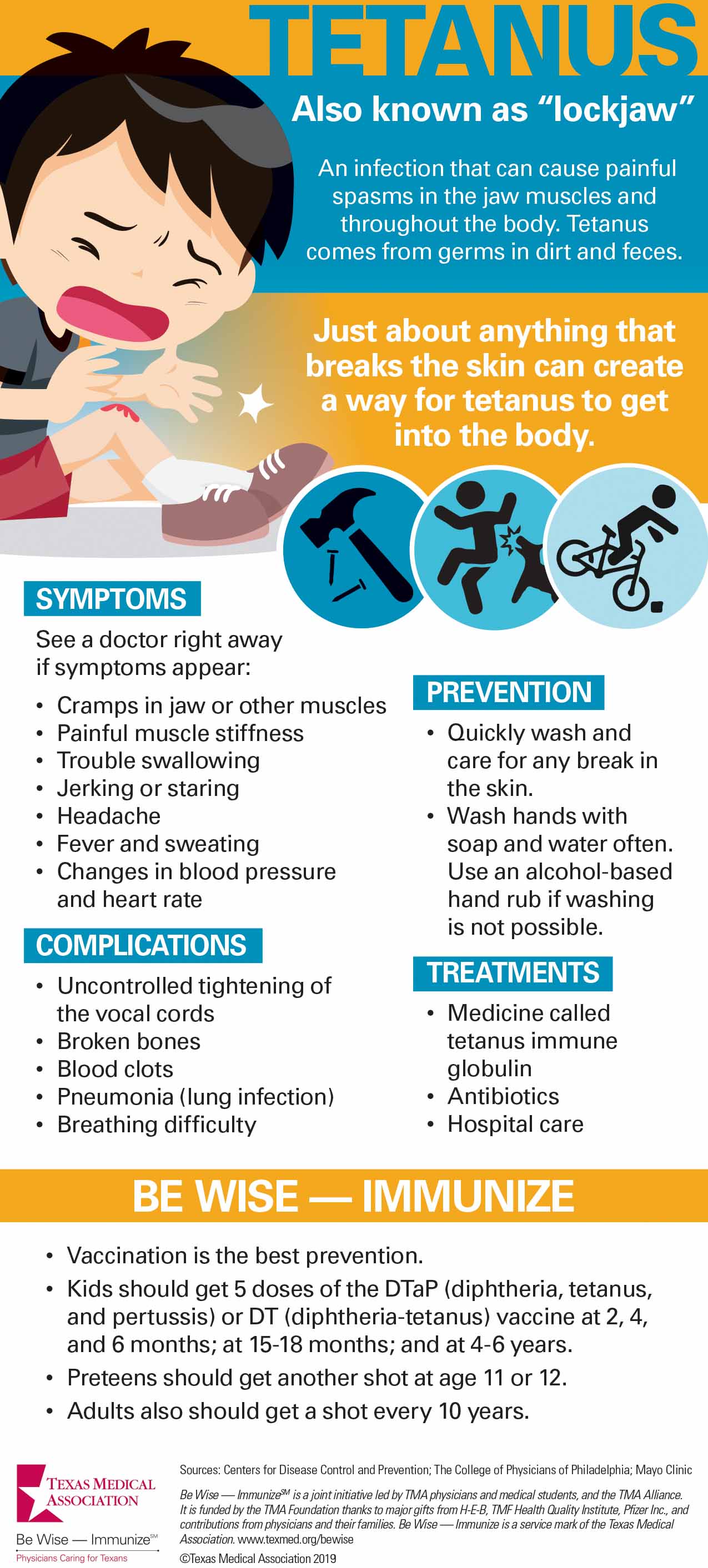 Almost All U S Tetanus Cases Occur Among People Who Are Unvaccinated Or Did Not Receive A Booster Shot According To The U S Centers For Disease Control And Prevention From texmed.org
The first sign is most commonly spasms of the muscles of the jaw or lockjaw Jaw cramping. Warning signs of tetanus may include headache increased blood pressure stiff jaw difficulty swallowing and body spasms. The symptoms of tetanus usually develop 4 to 21 days after infection. Sudden involuntary muscle tightening muscle spasms often in the stomach. Painful contractions of face and neck muscles causing facial spasms trismus or lockjaw. Onset of symptoms is typically three to twenty-one days following infection.
Warning signs of tetanus may include headache increased blood pressure stiff jaw difficulty swallowing and body spasms.
Painful spasms are one of the hallmark signs of tetanus. Tetanus is an infection characterized by a state of generalized hypertonia that manifests in the form of painful muscle spasms of the jaw and neck. This includes cuts punctures crush injuries burns and animal bites. Muscle spasms local to the site of infection or generalised spasms. Tetanus symptoms can continue for weeks and recovery can take months. The symptoms are muscle spasms especially in the face and back.
 Source: healthyafricans.com
Sometimes referred to as lockjaw tetanus is a severe disease that prompts painful muscle contractions. Spasms in the jaw muscles lockjaw Stiff muscles in the neck shoulder and back Difficulty swallowing Prolonged contraction of the facial muscles which may produce what looks like a sneer or grimace. Tetanus bacteria are more likely to infect certain breaks in the skin. The symptoms are muscle spasms especially in the face and back. About ten percent of cases prove to be fatal.
 Source: blog.houseofdiagnostics.com
Stiffness in your jaw muscles lockjaw which can make it difficult to open your mouth painful muscle spasms which can make it difficult to breathe and swallow a high temperature sweating a rapid heartbeat If its not treated the symptoms can get worse over the following hours and days. PHIL Photo ID 6374 This patient presented with facial tetanus. Facial muscles are often affected and lockjaw is common. Stiffness in your jaw muscles lockjaw which can make opening your mouth difficult painful muscle spasms which can make breathing and swallowing difficult. 10 to 20 percent of patients die from respiratory and circulatory disorders.
 Source: thebridgeclinic.com
Severe symptoms include struggling to swallow or breath. About ten percent of cases prove to be fatal. Severe symptoms include struggling to swallow or breath. Do I need a tetanus shot for a scratch. Tetanus is also called lockjaw.
 Source: ercare24.com
PHIL Photo ID 6374 This patient presented with facial tetanus. Painful contractions of face and neck muscles causing facial spasms trismus or lockjaw. PHIL Photo ID 6374 This patient presented with facial tetanus. On average they start after around 10 days. Tetanus is also called lockjaw.
Source: texmed.org
However the bacteria that causes tetanus isnt rare and its spores are found most commonly in dust soil feces and saliva. This neonate is displaying a bodily rigidity produced by Clostridium tetani exotoxin called neonatal tetanus Source. 10 to 20 percent of patients die from respiratory and circulatory disorders. Symptoms of tetanus include. The disease itself is rare in the United States because the tetanus vaccine is so effective and is regularly administered to our population.
 Source: healthline.com
This includes cuts punctures crush injuries burns and animal bites. 10 to 20 percent of patients die from respiratory and circulatory disorders. Muscle spasms local to the site of infection or generalised spasms. Most individuals with tetanus will also have the following symptoms. The symptoms of tetanus may become evident any time for a few days to six weeks after the initial infection with Clostridium tetani bacteria.
 Source: medicalnewstoday.com
Sudden involuntary muscle tightening muscle spasms often in the stomach. Recovery may take months. The first sign is most commonly spasms of the muscles of the jaw or lockjaw Jaw cramping. A tetanus infection may develop after almost any type of skin injury major or minor. Other symptoms of tetanus may include fever sweating headache trouble swallowing high blood pressure and a fast heart rate.
 Source: nestfamilymedicine.com
Signs and symptoms of tetanus are due to nervous system dysfunction and include progressive muscle spasms that cause stiffness and spasm of muscles throughout the body including the breathing muscles. This neonate is displaying a bodily rigidity produced by Clostridium tetani exotoxin called neonatal tetanus Source. Sudden involuntary muscle tightening muscle spasms often in the stomach. Stiffness in your jaw muscles lockjaw which can make it difficult to open your mouth painful muscle spasms which can make it difficult to breathe and swallow a high temperature sweating a rapid heartbeat If its not treated the symptoms can get worse over the following hours and days. Tetanus is an infection characterized by a state of generalized hypertonia that manifests in the form of painful muscle spasms of the jaw and neck.
 Source: bmj.com
10 to 20 percent of patients die from respiratory and circulatory disorders. This includes cuts punctures crush injuries burns and animal bites. Tetanus is often fatal. Symptoms of tetanus include muscle rigidity and spasms irritability muscle cramps sore muscles weakness or difficulty swallowing. Warning signs of tetanus may include headache increased blood pressure stiff jaw difficulty swallowing and body spasms.
 Source: healthsoul.com
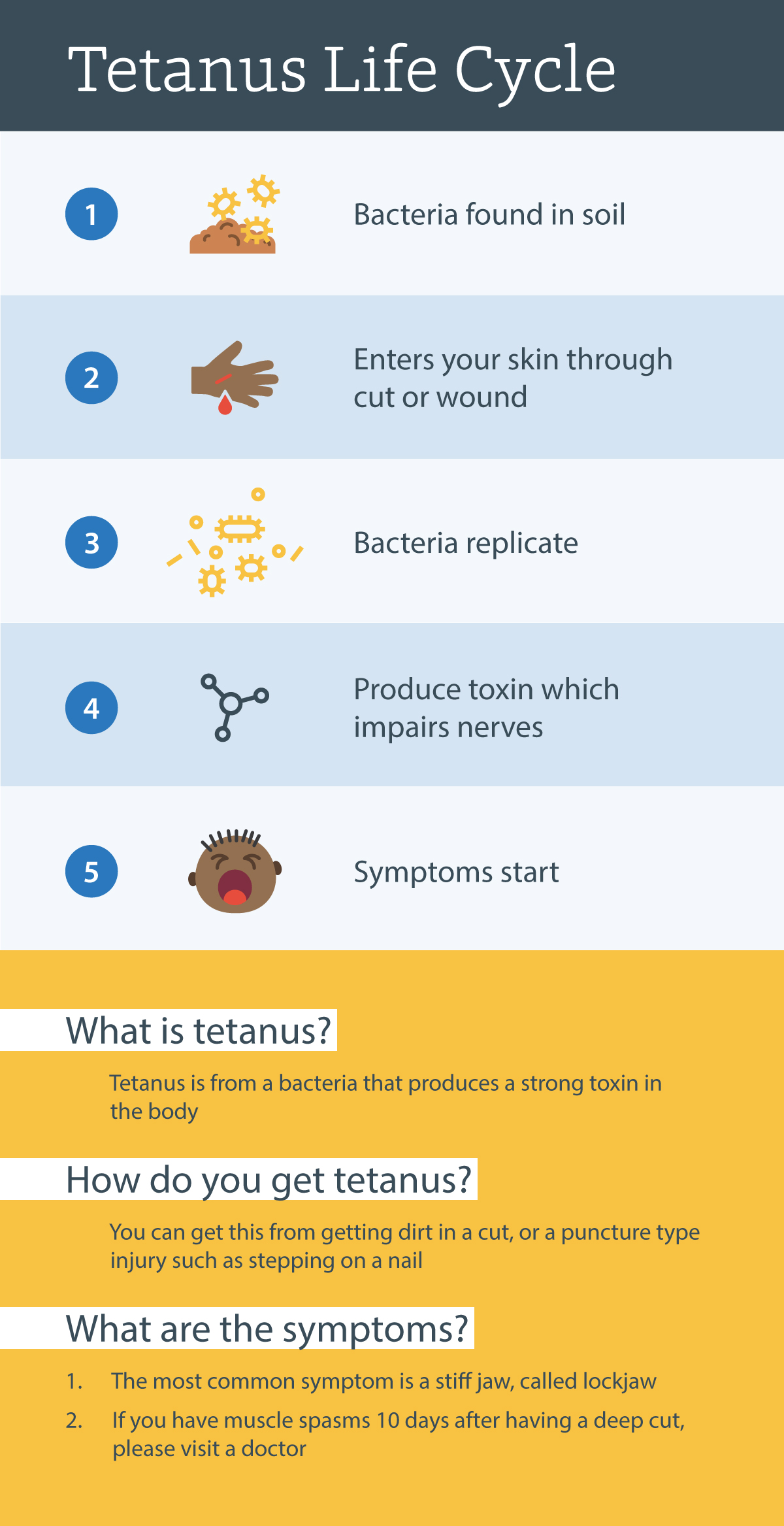
Other symptoms of tetanus may include fever sweating headache trouble swallowing high blood pressure and a fast heart rate. Once inside the body the tetanus bacteria multiplies and releases a toxin which affects nerves. Warning signs of tetanus may include headache increased blood pressure stiff jaw difficulty swallowing and body spasms. A tetanus infection may develop after almost any type of skin injury major or minor. People can protect themselves from the disease with preventive vaccination.
 Source: istockphoto.com
Stiffness in your jaw muscles lockjaw which can make it difficult to open your mouth painful muscle spasms which can make it difficult to breathe and swallow a high temperature sweating a rapid heartbeat If its not treated the symptoms can get worse over the following hours and days. Painful spasms are one of the hallmark signs of tetanus. Stiffness in your jaw muscles lockjaw which can make it difficult to open your mouth painful muscle spasms which can make it difficult to breathe and swallow a high temperature sweating a rapid heartbeat If its not treated the symptoms can get worse over the following hours and days. Sometimes referred to as lockjaw tetanus is a severe disease that prompts painful muscle contractions. Muscle spasms local to the site of infection or generalised spasms.
 Source: physicianoneurgentcare.com
Stiffness of the jaw lockjaw Stiffness of the abdominal and back muscles Contraction tightening of the facial muscles Convulsions Fast pulse Fever Sweating Painful muscle spasms near the wound area. Onset of symptoms is typically three to twenty-one days following infection. The main symptoms include. On average symptoms of tetanus begin seven to eight days after tetanus bacteria enter the body. The symptoms are muscle spasms especially in the face and back.
 Source: vaccinestoday.eu
Stiffness in your jaw muscles lockjaw which can make opening your mouth difficult painful muscle spasms which can make breathing and swallowing difficult. The most common symptoms of tetanus include. All it takes is a wound infected with tetanus bacteria for the condition to develop. People can protect themselves from the disease with preventive vaccination. Stiffness of the jaw lockjaw Stiffness of the abdominal and back muscles Contraction tightening of the facial muscles Convulsions Fast pulse Fever Sweating Painful muscle spasms near the wound area.
 Source: sciencedirect.com
It usually involves the limbs and may resemble epileptic seizures but without loss of consciousness. Warning signs of tetanus may include headache increased blood pressure stiff jaw difficulty swallowing and body spasms. The symptoms of tetanus usually develop 4 to 21 days after infection. The first sign is most commonly spasms of the muscles of the jaw or lockjaw Jaw cramping. On average symptoms of tetanus begin seven to eight days after tetanus bacteria enter the body.
 Source:
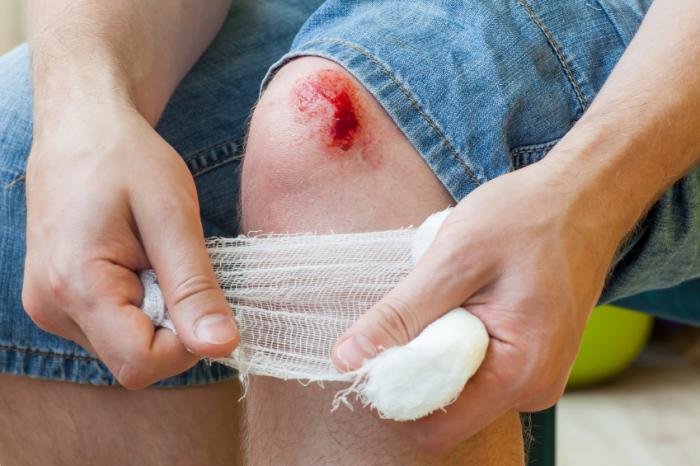
However the bacteria that causes tetanus isnt rare and its spores are found most commonly in dust soil feces and saliva. The disease most commonly occurs in those who are not vaccinated or in the elderly with waning immunity. Wounds contaminated with dirt poop feces or spit saliva Wounds caused by an object puncturing the skin puncture wounds like a nail or needle Burns Crush injuries Injuries with dead tissue Other Ways Tetanus Gets Into Your Body. It usually involves the limbs and may resemble epileptic seizures but without loss of consciousness. The main symptoms of tetanus include.
 Source: medicalnewstoday.com
The symptoms of tetanus may become evident any time for a few days to six weeks after the initial infection with Clostridium tetani bacteria. Warning signs of tetanus may include headache increased blood pressure stiff jaw difficulty swallowing and body spasms. On average they start after around 10 days. If these spasms affect the larynx or chest the child may not be able to breathe. Tetanus bacteria are more likely to infect certain breaks in the skin.
 Source: researchgate.net
Other associated symptoms can include headache irritability and restlessness. This includes cuts punctures crush injuries burns and animal bites. Bloody stools diarrhea fever headache sensitivity to touch sore throat sweating rapid heartbeat Treatment Wounds should be. People can protect themselves from the disease with preventive vaccination. Tetanus is an infection characterized by a state of generalized hypertonia that manifests in the form of painful muscle spasms of the jaw and neck.
 Source: healthline.com
Stiffness in your jaw muscles lockjaw which can make opening your mouth difficult painful muscle spasms which can make breathing and swallowing difficult. The symptoms of tetanus usually develop 4 to 21 days after infection. How we can get tetanus. Recovery may take months. The disease itself is rare in the United States because the tetanus vaccine is so effective and is regularly administered to our population.
This site is an open community for users to submit their favorite wallpapers on the internet, all images or pictures in this website are for personal wallpaper use only, it is stricly prohibited to use this wallpaper for commercial purposes, if you are the author and find this image is shared without your permission, please kindly raise a DMCA report to Us.
If you find this site serviceableness, please support us by sharing this posts to your preference social media accounts like Facebook, Instagram and so on or you can also bookmark this blog page with the title tetanus symptoms on skin by using Ctrl + D for devices a laptop with a Windows operating system or Command + D for laptops with an Apple operating system. If you use a smartphone, you can also use the drawer menu of the browser you are using. Whether it’s a Windows, Mac, iOS or Android operating system, you will still be able to bookmark this website.


