Your Ancient greek skin color images are available. Ancient greek skin color are a topic that is being searched for and liked by netizens now. You can Find and Download the Ancient greek skin color files here. Get all royalty-free vectors.
If you’re searching for ancient greek skin color pictures information connected with to the ancient greek skin color interest, you have pay a visit to the right site. Our website always gives you hints for seeing the highest quality video and image content, please kindly surf and find more informative video content and graphics that fit your interests.
Ancient Greek Skin Color. Public Domain. As mentioned above ancient Ethiopians were named such because of a misguided belief regarding their skin color. Its often claimed that ancient Greek colour distinctions are based mainly on brightness. Ancient Greek sculptures were painted many bright colors.
 Pin On Orisha From pinterest.com
320 BC was found in the royal necropolis of the Phoenician city of Sidon. THE NEGRO IN ANCIENT GREECE 33 By far the most common words which the Greeks used in these passages to designate the color of the Ethiopians skin were phXas black and compounds of phXas Keharvbs black or darkg and ubvtos darkO however were also used. In Ancient Greece pale skin was a sign of prestige and beauty. The upshot is that we can be pretty confident that Ancient Greeks were similar in genotype and phenotype to modern Greeks. κιρρός -ά -όν cirrhos -ā -on. It is from these ancient-peoples.
Ancient Greek writers tended not to talk about skin colour in quite the ways which we do now but there are references.
Olive oil helps to revitalize dry skin and contributes to the cell renewal process. Some Greeks have fairer complexions with pink or peachy tones but this is not as common as olive skin tones. Homer says of the Achaeans that λευκοὶ ὕπερθε γένοντο κονισάλῳ they became white from the cloud of dust above Iliad 5500 as horses and chariots raced past them. As mentioned above ancient Ethiopians were named such because of a misguided belief regarding their skin color. The Greek words that I like to use when making up new words are. Hue as opposed to achromatic colors black white and greys.
 Source: id.pinterest.com
So they faked it.
 Source: pinterest.com
In painted theater-masks the symbolism can be even more straightforward than what the Greeks thought they saw in nature. The upshot is that we can be pretty confident that Ancient Greeks were similar in genotype and phenotype to modern Greeks. The spectral composition of visible light. People of southern Europe have quite a wide variety of skin colors usually ranging from the palish white of central Europe to the brown of an Arab. ξανθός -ή -όν xanthos -ē -on.
Source: pinterest.com
That the Greeks regarded blackness as typical of the Ethiopians color. It is from these ancient-peoples. It is possible however that Greeks of the Bronze Age had darker skin eyes and hair. Information about your use of this site is shared with Google. It meant women and men didnt have to work for long hours in the fields to support themselves.
 Source: pinterest.com
ξανθός -ή -όν xanthos -ē -on. Ancient Greek skin colour. Because of this the ancient Greeks said their skin was burnt black by the heat of the sun. Xanthos may only be taken to mean the fair end of. Figuratively interest especially in a selective area.
 Source: pinterest.com
Because of this the ancient Greeks said their skin was burnt black by the heat of the sun.
 Source: pinterest.com
Human skin tone especially as an indicator of race or ethnicity. Here we look into a modern biased article meant to delude people into believeing Negroes were lollygagging all around Europe in Antiquity. Human skin tone especially as an indicator of race or ethnicity. But the same is true of English. Cookie Consent plugin for the EU cookie law.
 Source: pinterest.com
Cookie Consent plugin for the EU cookie law. The Alexander Sarcophagus c. Aristophanes straightforwardly equates white skin with woman which is expected for female characters but indicates effeminacy in male characters. Dark-haired and bronze-skinned their ideal of beauty was the total opposite. Cookie Consent plugin for the EU cookie law.
 Source: pinterest.com
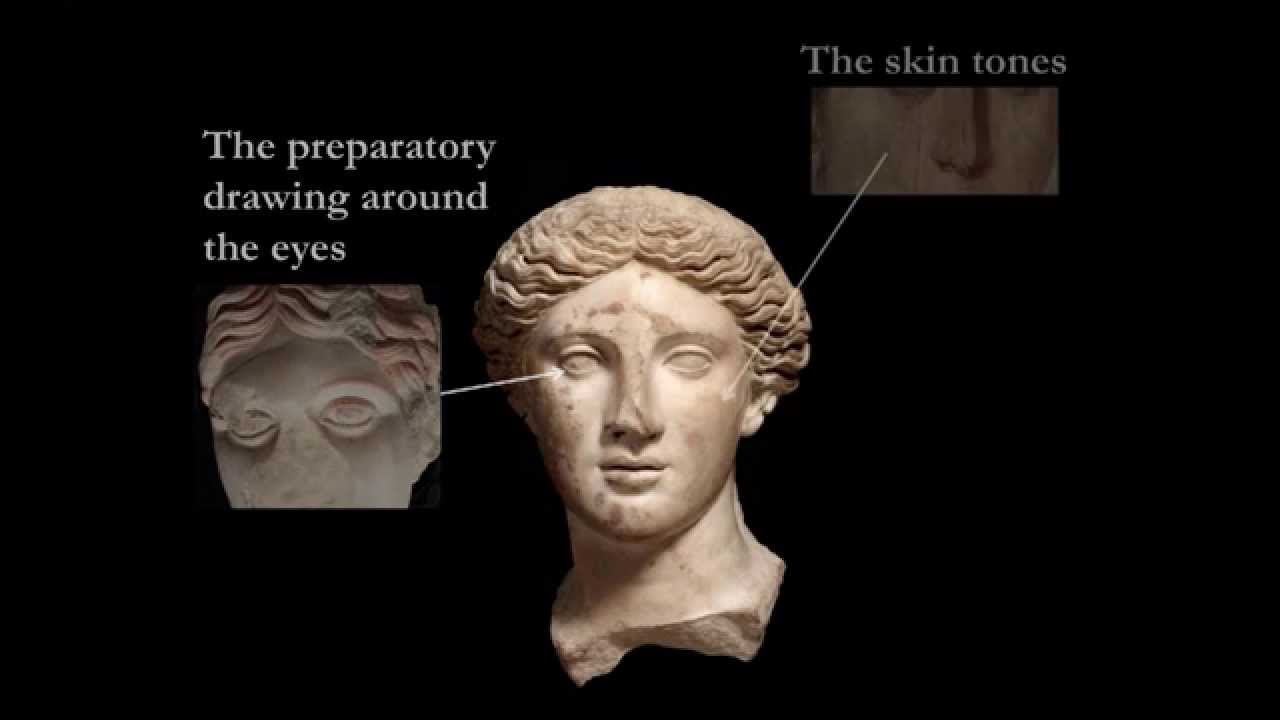
This post is a response to an October 2018 New Yorker article The Myth of Whiteness in Classical Sculpture written by Margaret Talbot which discusses the use of colour on ancient Roman and Greek statues. The ancient Greeks told plenty of stories about the Aithiopians or burnt-faced people who lived on the far edge of the world close to where the sun rises and sets. Aristophanes straightforwardly equates white skin with woman which is expected for female characters but indicates effeminacy in male characters. Olive oil made the skin look shiny and healthy while adding a bit of glowing color. Cookie Consent plugin for the EU cookie law.
 Source: pinterest.com
Human skin tone especially as an indicator of race or ethnicity. Dark-haired and bronze-skinned their ideal of beauty was the total opposite. For the ancient Greeks colors constituted a means of classification. Ancient Greek writers tended not to talk about skin colour in quite the ways which we do now but there are references. You can see this even today especially in places like Spain where I have lived most of my life.
 Source: pinterest.com
That the Greeks regarded blackness as typical of the Ethiopians color. Color terms are notoriously relative. They would also mix it with sugar or salt and use it as an exfoliant. Greek skin is normally olive colored or light brown. Long and curly golden locks and pale porcelain skin.
 Source: pinterest.com
Dark-haired and bronze-skinned their ideal of beauty was the total opposite. Ancient Greek writers tended not to talk about skin colour in quite the ways which we do now but there are references. They would also mix it with sugar or salt and use it as an exfoliant. The Alexander Sarcophagus c. For the ancient Greeks colors constituted a means of classification.
 Source: id.pinterest.com
Its often claimed that ancient Greek colour distinctions are based mainly on brightness. χλωρός -ά -όν chlōros -ā -on. Dyes pigments and paints have become so inexpensive that weve become a bit jaded. Color terms are notoriously relative. In ancient Greek according to Barbara Fowler 28 was any color short of black or dark brown while Wace 22 believes that it may have been at most auburn.
 Source: pinterest.com
Answer 1 of 7. κύανος -ου κυανοῦς -ῆ -οῦν cyanos -ū cyanūs -ē. Here we look into a modern biased article meant to delude people into believeing Negroes were lollygagging all around Europe in Antiquity. The Ancient Greeks were no different. So they faked it.
 Source: pinterest.com
It meant women and men didnt have to work for long hours in the fields to support themselves. In ancient Greek according to Barbara Fowler 28 was any color short of black or dark brown while Wace 22 believes that it may have been at most auburn. Here we look into a modern biased article meant to delude people into believeing Negroes were lollygagging all around Europe in Antiquity. However it is now certain that ancient Greek sculptors used bright colors as well as gold and ivory to further beautify the magnificent shapes they created. In Ancient Greece pale skin was a sign of prestige and beauty.
 Source: pinterest.com
The article argues that academics have known for centuries that the marble figures were covered in. Cookie Consent plugin for the EU cookie law. They would also mix it with sugar or salt and use it as an exfoliant. This site uses cookies from Google Adsense to personalize ads. Answer 1 of 7.
 Source: br.pinterest.com
It is possible however that Greeks of the Bronze Age had darker skin eyes and hair. Greeks and Latins are Mediterrenean peoples with skin colour-tones to match. Color terms are notoriously relative. You can see this even today especially in places like Spain where I have lived most of my life. Figuratively interest especially in a selective area.
 Source: pinterest.com
ξανθός -ή -όν xanthos -ē -on. Long and curly golden locks and pale porcelain skin. 320 BC was found in the royal necropolis of the Phoenician city of Sidon. Ancient greek Nova Skin. Xanthos may only be taken to mean the fair end of.
 Source: pinterest.com
The upshot is that we can be pretty confident that Ancient Greeks were similar in genotype and phenotype to modern Greeks. The spectral composition of visible light. The ancient Greeks certainly understood that white is a color and that some people have skin that is a color close to white but they never had any concept of whiteness as a racial category. Color terms are notoriously relative. Some Greeks have fairer complexions with pink or peachy tones but this is not as common as olive skin tones.
This site is an open community for users to do submittion their favorite wallpapers on the internet, all images or pictures in this website are for personal wallpaper use only, it is stricly prohibited to use this wallpaper for commercial purposes, if you are the author and find this image is shared without your permission, please kindly raise a DMCA report to Us.
If you find this site value, please support us by sharing this posts to your preference social media accounts like Facebook, Instagram and so on or you can also bookmark this blog page with the title ancient greek skin color by using Ctrl + D for devices a laptop with a Windows operating system or Command + D for laptops with an Apple operating system. If you use a smartphone, you can also use the drawer menu of the browser you are using. Whether it’s a Windows, Mac, iOS or Android operating system, you will still be able to bookmark this website.


